
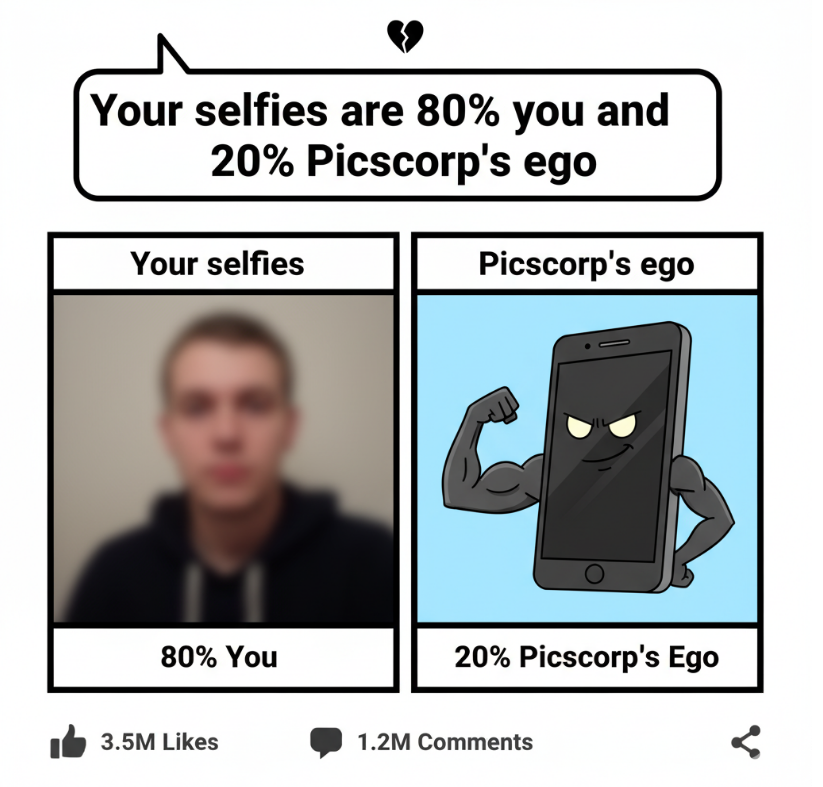
It's 2025, and if you haven't heard of Picscorp by now, you might be living under a rock or, even worse, in a house with terrible Wi-Fi. You see this company's name in tech news, camera updates, and those strange YouTube videos where some guy says he "discovered the future of digital art." But no one really knows what Picscorp does; they just know it sounds important. Well, get ready. This is your crash course into the mysterious master of pixels, because you've had too much caffeine and read too many confusing innovative press releases. If you thought the "dog ears" era was the best time for camera filters, wait till you see what Picscorp has been up to. Let's look at five sly, strange, and brilliant aspects about Picscorp, the business that wants to turn your eyes into the next frontier of AI.
1. Picscorp's Technology Is Everywhere, Like It or Not
You know that picture you shot this morning that made your skin look almost too good to be true? Or the commercial for that product that had colours so bright you thought you could smell it? That's Picscorp doing its job, quietly making everything look beautiful while you act like you still have control over anything digital. Here's the twist: Picscorp's imaging technology has probably changed, edited, or altogether redone half of the pictures you view online today. They don't just stand behind the curtain; they are the curtain. The software from Picscorp runs cameras, editing tools, and visual analytics on all kinds of devices, from your phone's photo app to the filters that your favourite influencer insists "aren't edited" (sure, Jan). Its AI improves lighting, balances tones, and basically transforms your camera into a small, judgemental art director who knows what "good lighting" implies.
Picscorp isn't "joining" the digital revolution; they're just taking use of your cloud storage like an unwanted but necessary flatmate. And the craziest part? You wouldn't even know it. They make sure that their fingerprints can't be seen. While other digital businesses brag about their wins on social media every hour, Picscorp has been quietly running your whole visual world from the shadows. It's like Batman, except with image technology.
2. They have basically taught machines How to Paint Your Emotions
Yes, emotions. Like "sad girl autumn," but done by a computer. Picscorp's next-generation visual technology doesn't simply see colours and shapes; it also understands how images make people feel. It's like your camera was a psychology student who cried at Pixar films.
Picscorp's system can "sense" what a picture's vibe should be thanks to deep learning models (which are basically AI with too much personality). The AI changes the lighting to fit "dramatic melancholy" if it's not right. If your expression is flat, it changes the contrast to make you look "intentionally stoic." Picscorp has turned your visual identity into a mood ring. In other words, they're not simply improving pictures anymore; they're also improving intent. If you took a random selfie with awful overhead lighting, Picscorp's model would say, "No, no, this photo screams heartbreak and self-growth." You now have a movie-like breakup portrait without even trying.
Somewhere, film photographers are burning ceremonial candles in protest while their
cameras cry softly in the background. In short, Picscorp is getting dangerously close to giving machines taste, which might really be an upgrade since human taste is already so unsteady.
3. Picscorp Is the Person Who Writes the Scripts for Your Favourite Visual Trends
You know that super-realistic art made by AI that you see all over TikTok? The one where people are converting their high school yearbook pictures into posters for dystopian films or acting like they're in mediaeval epics? What kind of technology engine makes a lot of that possible? Yes. Picscorp. It's the unknown hero (or maybe scary genius) behind the top visual trends of 2025. Their innovative AI is the plug that everyone uses but no one gives credit for. Designers, marketers, and bored remote workers with too much free time all use Picscorp's image platform to make material that makes people in the comments say, "How is this even real?"
Spoiler: It's not. It's real-life Picscorp, which is better than real. More sharp. More shiny. Most likely smarter than either of us. But let's be honest: this organisation is lifting the bar for content quality all over the place. You can't just publish a regular picture anymore. Picscorp's technology has made every picture look like an ad. Your cat picture even seems like it's selling catnip luxury goods. Here is a short list of items that Picscorp damaged for all of us by mistake: "Raw" looks (nothing is raw anymore, Karen). Real film grain (Picscorp's AI cleaned it up). Realistic lighting (as if such ever existed). In short, Picscorp made perfection the norm and made mediocrity worse for everyone else. I guess thanks?
4. The Company Can't Stop Trying to Stay Hidden
This is what actually makes people go crazy when they drink too much coffee: Picscorp isn't like a Kardashian skincare line that tries to promote itself. They don't work with influencers, they don't fill your advertising with "As Seen on Forbes!" bullshit, and they definitely don't send out cringe-worthy brand manifestos about "innovation through synergy." The whole mood of Picscorp is mysterious competence. They don't have time to post motivational quotations on LinkedIn because they're too busy bending digital light and changing the laws of physics.
That sneaky way of doing things isn't an accident; it's a plan. Their technology runs in the background of every program, camera, and rendering tool you use without you knowing it. They don't want to be praised; they want to rule without being seen. So, yes, Apple, Meta, and Google are all out there yelling, "LOOK AT ME!" From behind the scenes, Picscorp is only tightening the screws on visual reality. To be honest, it's kind of smart. Picscorp just becomes stronger every time a showy, PR-hungry firm messes up. People trust things that don't seem to break. Picscorp is the Wi-Fi of pictures. It quietly saves your life until it goes away and everything goes wrong.
5. They might actually make reality useless (and we're fine with it).
Let's be clear: Picscorp is not only fixing photos anymore. They are changing what it means to be "visually true." In 2025, their program will discern what is real and what isn't. People appear to be cool with this, which is strange. Their most recent projects include hyperrealistic 3D settings, living filters, and predictive picture rendering. These are technologies that can literally predict how a scene will look before it happens. Instead of "photo correction," think "all-knowing worldbuilder that also protects your camera."
In simple terms, if reality isn't great, Picscorp will graciously change it for you. They're making a world where terrible lighting, ugly backgrounds, and things that don't look right don't happen. Every frame is carefully chosen. Every pixel is as good as it can be. The horrible fluorescent lights in your grocery store? No longer here. It's always golden hour now. Is it scary? Of course. But it's also very cool. Who wants to cope with "real" reality anymore? We talked about it again in the middle of 2020. Picscorp lets us fully live in the fantasy, with precise lines, shiny textures, and all. It's not about perceiving the world as it is right now. It's about seeing it the way Picscorp thinks it should be. And to be honest? Their version looks better.
Conclusion: The Last Pixel Drop
So there you have it: five reasons why Picscorp is quietly taking over the visual world while the rest of us bicker over whether AI art is "real creativity." They are invisible, annoying, emotional, and very smart, and they are probably judging you through your phone camera right now. Congratulations! If you made it this far, you know more about Picscorp than most people who casually mention them on podcasts. So the next time someone says, "Oh, Picscorp is doing amazing things in visual AI," you can nod like you've read the Wikipedia article (you haven't, but now you don't have to).
Be careful—really. If Picscorp becomes any smarter, your phone camera might start to criticise you.



PicsCorp is your go-to online tool for quick and powerful image editing and compression. Enhance, resize, and optimize your photos effortlessly — all in one place, without losing quality.
Add a Comment