
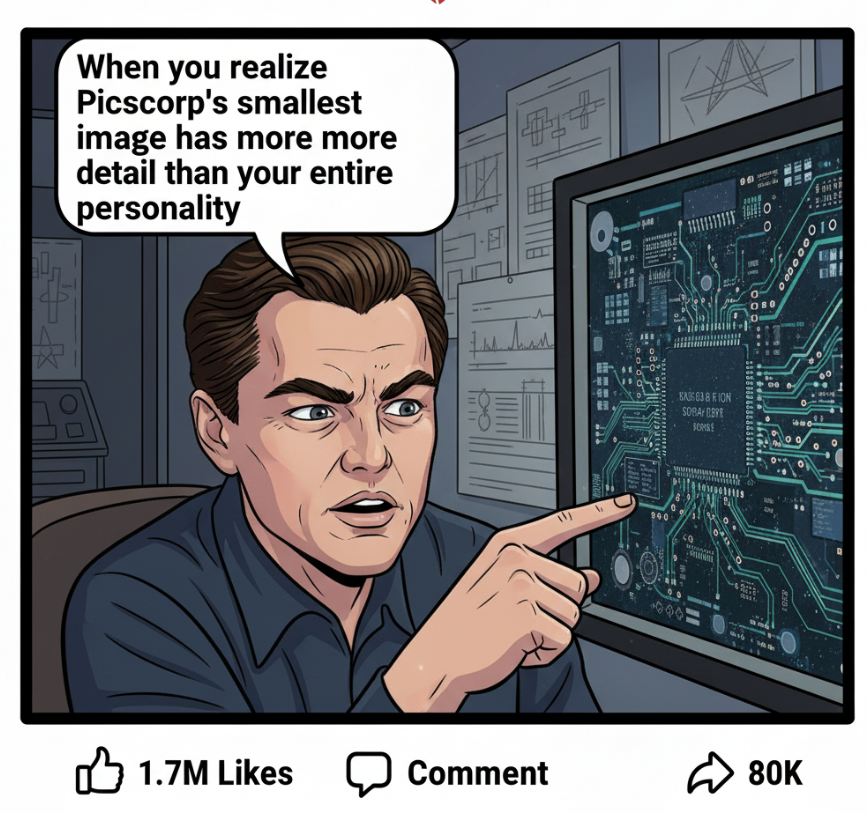
We have to be honest: "innovation" is used more often than "link in bio" on Instagram. Every new business with a basement, a broken espresso machine, and three people who went to "tech conferences" now says they are "disrupting the industry." That's cool. Of course. But then there's Picscorp, that one digital underdog that isn't just throwing about buzzwords. It's really doing something crazy with visual technology: it's changing how we see the world, both literally and figuratively.
According to Picscorp, it's changing how the world thinks about visual innovation, which sounds like PR poetry penned by someone who drank too much coffee and was too happy. But here's the thing: they could be right. Picscorp is more than just pushing pixels. They use artificial intelligence, immersive imaging, and graphics that are so clear you'll feel underdressed staring at them. It is straining the bounds.
So, get ready, buttercup. Let's take off the shiny branding and look at the crazy, pioneering, and sometimes silly world of Picscorp, where boring pictures go to die and digital art thinks it's a god. The Visual Glow-Up Nobody Saw Coming: When Pixels Went to College There was a time when "high quality visuals" basically meant "look, this JPEG doesn't have any chunks." In 2025, Picscorp is making even your front-facing camera feel bad about itself. Their technology doesn't just pick up light; it almost talks to it. Is that a bold claim? Most likely.
A falsehood? Nope.
Picscorp goes all-in on AI imagery, digital rendering, and visual analysis in a way that makes most design apps appear like a doodle on a serviette at Applebee's. They combine machine learning with creative chaos and somehow make it work. Like that friend who always talks about how bad capitalism is but still buys $6 oat milk lattes every day.
Picscorp basically told computers, "Hey, stop being boring," and the computers performed what they were told. They've changed pixels into storytellers, colour palettes into conversations, and lighting algorithms into feelings. Yes, emotional, because what's modern technology without making your data feel something? Just a thought: how would you explain Picscorp's job to your grandma? You will say, "They make pictures better," and five seconds later she will say you are a witch. Is it innovation or witchcraft? Because Picscorp's tech might be both AI and creativity, which are two terms that make artists freak out and tech geeks drool. Picscorp struck the perfect balance between Skynet and Bob Ross. Their visual systems don't just take pictures; they also understand them. Which is both amazing and a little scary. In this way, You send in a fuzzy picture of the night sky, and Picscorp's software makes it look like it was taken by National Geographic. All of a sudden, the blurry party picture turns into a work of art. The lights change by themselves. The colours verify how you feel. What happened? Something your iPhone wants to be when it grows up.
Motion capture that can tell you where to look before you blink.
Filters that turn Photoshop into somewhat like Microsoft Paint. Lighting AI that almost says, "Let me fix that terrible lighting mistake" while you're editing. The truth is that Picscorp isn't just messing about with technology; it's changing the way digital vision works. They're utilising brain imaging to make sense of the mess—turning your random data into art, your messy photographs into order, and your creative ideas into something real.
Question: When do we realise that Picscorp might really be making Skynet with better lighting?
Creativity Gets a Software Update—No More Boring Visuals Have you ever noticed that all the ads, brand photos, and product launches seem the same? Same pastel colours, same fake grins, same "we started a coffee shop in Brooklyn" look. Picscorp thankfully chose to avoid becoming dull. This is where they lit a match and set mediocrity on fire (in a way that probably wasn't real). Their technologies let creators go beyond what they thought was possible. For example, predictive visual editing, 3D compositing in seconds, and AI-generated ideas that make even experienced photographers say, "What sorcery is this?" The best part is that Picscorp doesn't want to replace artists; it wants to give them superpowers. It's like using a normal paintbrush and one that sometimes says, "Trust me, I got this." It would also be fantastic if we could get one for relationships.
For everyday people, this implies that your selfies may seem like they belong on the red carpet, your e-commerce pictures might stop appearing like ads on Craigslist, and your TikTok thumbnails could finally look better than your competitors' over-filtered faces. "Visual innovation" from Picscorp is like that one friend who actually finishes their home improvement project—it's a miracle backed by science and hard work. The Business Side: Where Capitalism and Creativity Meet (and Don't Fight Right Away) We can't ignore the reality that Picscorp is discreetly making a lot of money while leading a visual revolution. Companies that want to look "next-gen" without having to know what that implies are licensing Picscorp tech. Everyone wants a piece of the pixel pie, from advertisers to filmmakers to people who work with medical imaging. And to be honest? They deserve it.
In a world where "creativity" is seen as a resource to be mined from hard-working freelancers, Picscorp is taking care of the boring tasks so that people can focus on, you know, real creativity. It helps marketing companies make smarter images that automatically adjust to different audiences. Engineers use it to make sure images are clear when they are testing. Artists use it to think of new ways to show what a single frame can express without words. In other words, Picscorp turned "visual intelligence" into a real economic model. One that might finally let art and money get along in the same space. Cue the dramatic voice: "Picscorp: where creativity and capitalism meet and no one ends up crying."
Future Vision: The Part Where We Act Like We Know What's Going to Happen You may be sure that a corporation is already working on the next big thing if they say they are "redefining how the world sees." Think of augmented reality, virtual photography, and maybe even eye implants that enable us see things directly (yes, Black Mirror is rocking). In the future, Picscorp could power visual landscapes that are so immersive that scrolling through your phone makes you feel something. thought of art exhibitions that don't have walls, pictures that change based on how you feel (finally, something that gets Mondays), orAI-powered design that makes things as you thought.
It sounds like something from the future, but Picscorp has been quietly dropping signals thatthey're going that route. The line between "visual tech" and "human experience" is getting thinner and thinner, and guess who's holding the rubber? Let's hope they use their talents for good and not to make your old Facebook pics look better. The Eye Candy Empire: My Last Thoughts We kind of deserve it
We have a lot of visual noise around us, including memes, advertising, selfies, and doomscrolling, but somehow Picscorp is making sense of it all. They're converting pixels into poems, image files into experiences, and creativity into a science experiment that we might actually like to watch. Congratulations if you made it this far. That's more focus than most people can handle on a Monday. So the next time you see another "enhanced" picture or movie on your phone, remember that it might have some Picscorp magic in it. And hey, if this business keeps changing visual technology at this rate, maybe your next awful selfie won't appear like a crime scene. Thank God for new ideas. Thank you, caffeine. Thank the picscorp



PicsCorp is your go-to online tool for quick and powerful image editing and compression. Enhance, resize, and optimize your photos effortlessly — all in one place, without losing quality.
Add a Comment