
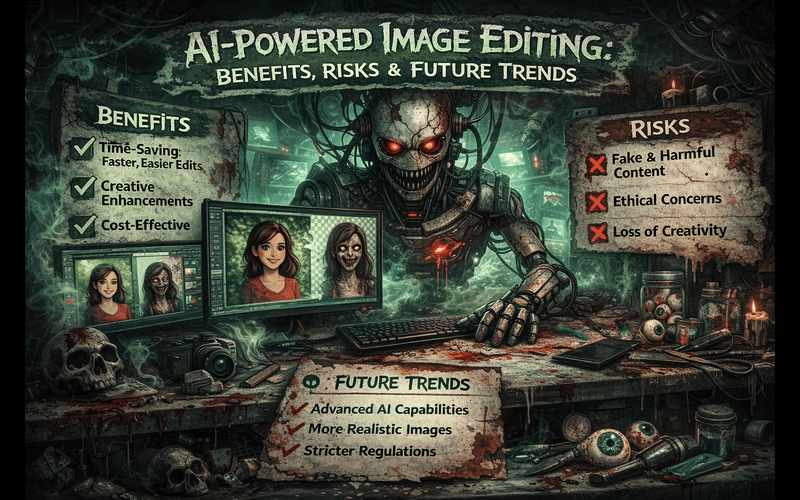
Artificial intelligence is transforming the way websites create and optimize visual content. In 2026, AI-powered image editing is no longer limited to advanced design studios — it is available to bloggers, e-commerce owners, marketers, and small businesses through simple online tools. From automatic background removal to smart image enhancement, AI is helping websites publish faster, look more professional, and compete in high-demand markets like the United States, United Kingdom, Canada, and Europe.
Search engines such as Google increasingly prioritize user experience, page speed, and content quality. Visual optimization plays a major role in these metrics. AI-powered editing tools now combine automation with performance optimization, helping website owners improve both aesthetics and technical efficiency. In this article, we explore the benefits, risks, and future trends of AI-powered image editing, along with practical SEO considerations.
AI-powered image editing refers to the use of machine learning algorithms to automatically enhance, modify, or optimize images. Instead of manually adjusting brightness, contrast, cropping, or background removal, AI tools analyze images and apply intelligent adjustments instantly.
Popular AI-powered features include:
Major technology companies such as Adobe and Canva have integrated AI features into their platforms, making advanced editing accessible to non-designers.
For website owners, this means faster workflows and lower design costs.
Speed matters in digital publishing. AI tools reduce editing time from hours to seconds. Instead of manually cutting backgrounds or adjusting lighting, website owners can generate ready-to-publish images almost instantly.
This is particularly beneficial for:
Faster publishing can lead to more indexed pages and better long-term SEO growth.
Hiring professional designers or purchasing premium stock image packages can be expensive. AI-powered editing tools reduce dependency on external services.
Small businesses and startups can:
Lower production costs improve overall profitability.
Clear, optimized visuals improve website credibility. AI tools help:
Better visuals increase user engagement, which supports SEO performance.
For image optimization best practices
High-quality images combined with proper ALT text and compression contribute to better rankings in image search results.
Websites with hundreds or thousands of images benefit greatly from automation. AI tools can process bulk images quickly, making large-scale optimization possible.
For example:
Scalability helps growing websites maintain consistent quality.
AI editing often goes hand-in-hand with smart compression and resizing.
After AI editing, images should be optimized for performance.
Compress images for faster website speed
Convert images to WebP or AVIF
Modern formats reduce file size while maintaining visual clarity.
For technical performance insights,
While AI offers many benefits, it also presents certain risks.
AI-generated or heavily edited images may appear artificial. Overuse of AI effects can reduce authenticity, especially for industries like healthcare, finance, or legal services.
Trust is critical for conversion rates. Realistic and honest visuals often perform better in sensitive industries.
AI-generated content laws are still evolving. Ownership rights may vary depending on the platform used. Website owners must carefully review licensing policies before publishing AI-edited or AI-generated visuals.
Legal clarity is essential for long-term business sustainability.
AI tools sometimes export high-resolution files that are unnecessarily large. Uploading these files without optimization can negatively impact page speed.
Large images affect:
Proper compression and resizing remain essential.
AI simplifies editing, but it does not replace creative judgment. Blindly trusting automated adjustments may result in inconsistent branding or inaccurate visuals.
Human review remains important.
AI-powered editing itself does not automatically improve search rankings. However, when used strategically, it supports SEO indirectly through:
Search engines such as Google evaluate user behavior signals alongside technical performance.
Optimized visuals help keep users on your website longer, which can positively influence search performance.
The future of AI-powered image editing is rapidly evolving. In the coming years, we can expect:
AI tools will integrate directly into content management systems, allowing instant optimization during upload.
AI may automatically generate:
This will streamline SEO workflows.
AI-generated visuals are becoming more realistic. Future systems will better mimic natural lighting, texture, and human details.
Future tools may automatically:
Automation combined with performance intelligence will redefine website optimization standards.
To maximize benefits while minimizing risks:
Responsible usage ensures sustainable growth.
AI-powered image editing is reshaping the digital landscape in 2026. It offers significant advantages in speed, cost efficiency, scalability, and visual enhancement. For websites targeting competitive markets like the USA, UK, Canada, and Europe, AI tools provide a powerful edge.
However, AI editing also comes with risks — including authenticity concerns, legal uncertainty, and potential performance issues. Success depends on balanced implementation.
When combined with proper compression, format conversion, and SEO best practices, AI-powered image editing becomes a valuable component of modern website optimization.
Innovation is powerful — but strategy makes it sustainable.



PicsCorp is your go-to online tool for quick and powerful image editing and compression. Enhance, resize, and optimize your photos effortlessly — all in one place, without losing quality.
Add a Comment