
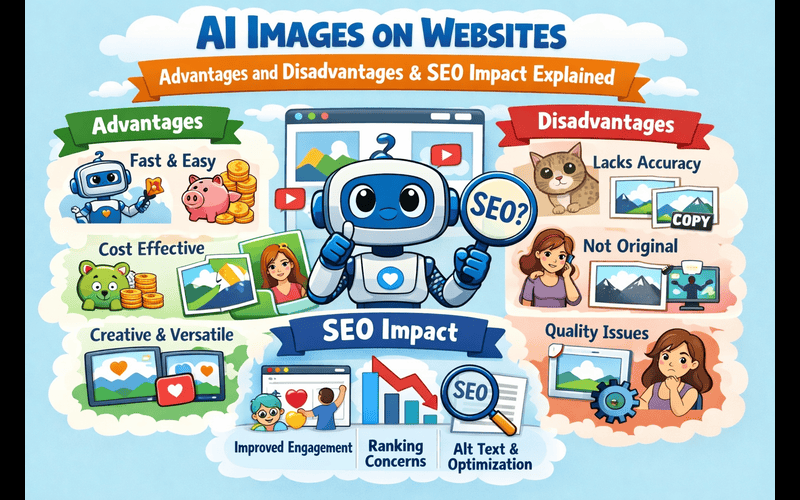
Artificial intelligence is transforming the way websites create and display visual content. In 2026, AI-generated images are widely used by bloggers, e-commerce stores, startups, marketing agencies, and content creators. From hero banners to product mockups, AI visuals are becoming a practical alternative to traditional photography.
Tools powered by companies like OpenAI and other AI innovators now allow website owners to generate custom images within seconds. This has dramatically reduced design costs and production time.
However, while AI images offer impressive advantages, they also come with important limitations and risks. For websites targeting competitive regions such as the United States, United Kingdom, Canada, and Europe, understanding both the benefits and drawbacks is essential.
In this guide, we explore the advantages and disadvantages of using AI images on websites and how they affect SEO, performance, and user trust.
AI-generated images are visuals created using machine learning models trained on large image datasets. Instead of taking a photograph or designing manually, users enter a text prompt such as:
“Modern office workspace with laptop and coffee in minimal style”
The AI system then generates a unique image based on that description.
These images can be used for:
Because AI images are custom-generated, they are often considered unique, which can support originality in content marketing.
Hiring photographers or purchasing premium stock images can be expensive, especially for startups and small businesses. AI tools significantly reduce costs by allowing unlimited image creation without recurring licensing fees.
For small business websites, this makes high-quality visuals more accessible.
Traditional image sourcing takes time. AI tools generate visuals instantly, allowing website owners to publish articles and landing pages more quickly.
This is especially useful for:
Faster publishing means more content opportunities and improved SEO growth over time.
AI images allow complete customization. Instead of searching through stock libraries, you can generate visuals tailored exactly to your content.
For example:
This helps websites stand out visually in crowded markets.
Search engines such as Google evaluate user experience and content originality. While AI images do not automatically improve rankings, unique visuals can:
According to official image optimization guidelines from Google developers
Search engines prioritize relevant, high-quality visuals with proper ALT text.
When AI images are optimized correctly, they can contribute positively to SEO performance.
Websites publishing large volumes of content benefit from AI-generated visuals. Instead of relying on limited stock libraries, AI tools provide endless design variations.
For high-traffic blogs in the USA and Europe, scalability is a major advantage.
While AI images offer many benefits, there are important concerns to consider.
AI-generated content laws are still evolving. Some regions are debating copyright ownership of AI visuals. Website owners must ensure they use AI tools responsibly and review licensing terms carefully.
Relying entirely on AI without understanding legal implications may create future risks.
AI images may look visually impressive but sometimes lack realism or emotional depth. Overuse of artificial visuals can reduce brand authenticity.
Users in Western markets often value genuine photography, especially for:
Authenticity builds trust, which directly affects conversions.
AI-generated images sometimes follow predictable styles. If multiple websites use similar prompts, visuals may start to look alike.
This reduces brand uniqueness and visual differentiation.
AI-generated images are often high-resolution files. If not optimized properly, they can slow down websites.
Large images negatively impact Core Web Vitals and page speed metrics.
For performance guidance
Compress AI-generated images before uploading
Proper optimization prevents performance issues.
Some audiences prefer transparency about AI-generated content. Not disclosing AI visuals in certain industries may affect credibility.
Businesses should consider:
Responsible AI use builds long-term trust.
Stock photos offer:
AI images offer:
The best approach is often a combination of both, depending on website goals.
To maximize SEO benefits while avoiding disadvantages:
Optimize File Size AI images can be large. Always compress and convert before uploading. Convert images to WebP for better speed,
Avoid Misleading Visuals Do not use AI-generated images that imply real products, testimonials, or locations if they are fictional. Transparency protects brand credibility.
AI images are ideal for:
They may not be ideal for:
Strategic use is key.
In 2026 and beyond, AI image tools will continue improving in realism, resolution, and customization. However, search engines will likely focus more on authenticity, trust signals, and user satisfaction.
Websites that combine AI creativity with responsible optimization and transparency will gain the most benefit.
The goal should not be replacing all visuals with AI, but integrating AI strategically where it adds value.
AI images offer powerful advantages for website owners, including cost savings, faster production, and creative flexibility. They can enhance engagement and support SEO when optimized correctly.
However, they also present challenges related to authenticity, legal clarity, performance optimization, and ethical considerations.
For websites targeting competitive markets like the USA, UK, Canada, and Europe, thoughtful implementation is essential.
Use AI images strategically. Combine them with proper compression, format conversion, and SEO best practices. Balance innovation with authenticity.
When used responsibly, AI-generated visuals can be a valuable asset in modern website growth strategies.



PicsCorp is your go-to online tool for quick and powerful image editing and compression. Enhance, resize, and optimize your photos effortlessly — all in one place, without losing quality.
Add a Comment