
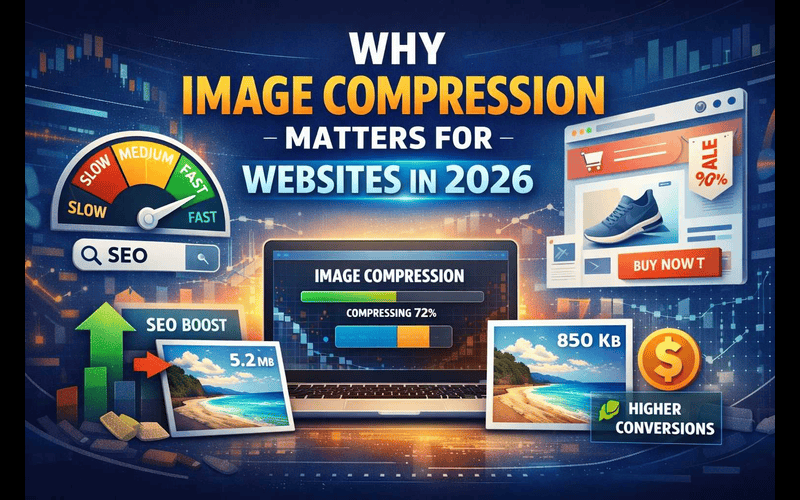
In 2026, website performance directly impacts search rankings, user experience, and online revenue. If your pages load slowly due to large image files, you are losing valuable traffic — especially in competitive markets like the United States, United Kingdom, Canada, and Europe.
Search engines such as Google evaluate page speed as a ranking factor. That means image optimization is no longer optional — it is essential.
If you run a blog, e-commerce store, portfolio site, or business website, image compression can dramatically improve your visibility and conversions.
Image compression is the process of reducing an image file’s size while maintaining acceptable visual quality.
There are two primary methods:
1. Lossy Compression Removes unnecessary data to reduce file size significantly.
2. Lossless Compression Reduces size without sacrificing image quality.
Modern websites increasingly use next-generation formats such as WebP and AVIF for better performance.
👉 Try our free Image Compressor Tool
Users today expect websites to load instantly. Studies show that if a page takes more than 3 seconds to load, many visitors leave.
Slow websites result in:
According to Google’s performance guidelines
Core Web Vitals measure:
Large, unoptimized images are one of the biggest causes of poor LCP scores.
Search engines prioritize fast, user-friendly websites. Compressed images help by:
Better performance means better chances of ranking in:
For further SEO guidance
If you use advertising platforms like Google AdSense, faster websites typically earn more.
Why?
A slow website reduces ad impressions and decreases RPM.
Image compression indirectly increases revenue by improving engagement and retention.
In regions such as North America and Europe:
E-commerce stores especially benefit from optimized product images.
👉 Internal Link Suggestion: Convert images to WebP
Here’s what professionals are using:
JPEG for Photography
PNG for Logos & Transparency
WebP for Websites & Blogs
AVIF for Modern Performance Sites
WebP was introduced by Google to reduce file sizes without sacrificing quality.
Beyond compression, you should:
Use descriptive ALT text,
Rename files properly (example: beach-sunset-2026.webp)
Enable lazy loading,
Use a CDN for global traffic,
Resize images before uploading
Let’s say you upload a 5MB homepage banner image.
After compression:
That single change can increase revenue significantly.
Online tools are ideal because:
For freelancers, bloggers, and small businesses, browser-based tools are faster and more convenient than heavy desktop software.
In 2026, website speed equals business growth. Whether your audience is in the USA, UK, Canada, or Europe, optimized images help you:
Image compression is one of the easiest and most effective improvements you can make today.
Start optimizing your images now and stay ahead of the competition.



PicsCorp is your go-to online tool for quick and powerful image editing and compression. Enhance, resize, and optimize your photos effortlessly — all in one place, without losing quality.
Add a Comment