
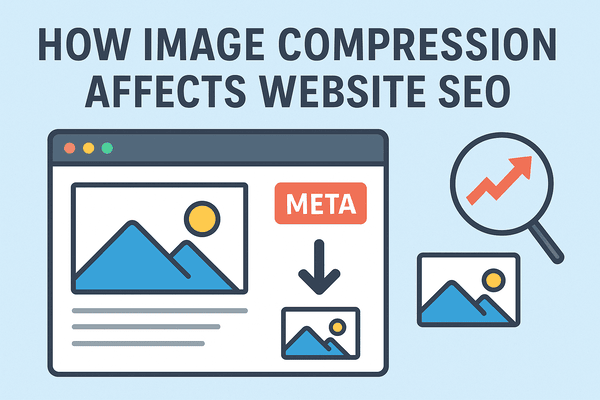
Image compression plays a critical role in modern website SEO. Search engines like Google prioritize user experience,
and page speed is one of the strongest ranking factors. Large, unoptimized images increase page load time,
leading to higher bounce rates and lower search rankings.
Google’s Core Web Vitals measure loading performance, interactivity, and visual stability.
Images often account for more than 50% of a page’s total size. When images are too large, pages load slowly,
especially on mobile networks. Slow pages frustrate users and signal poor quality to search engines.
Compressed images reduce file size while maintaining visual quality.
Smaller files load faster, improving Largest Contentful Paint (LCP) and overall page speed.
Faster pages keep users engaged longer, reduce bounce rates, and increase the likelihood of higher rankings.
Most users browse on mobile devices. Mobile connections are slower and more sensitive to heavy images.
Optimized images ensure smooth browsing, which is essential for mobile-first indexing used by Google.
Using an online image compression tool like PicsCorp allows you to optimize images quickly without technical knowledge.
By making image optimization a habit, you improve SEO, user experience, and overall website performance.



PicsCorp is your go-to online tool for quick and powerful image editing and compression. Enhance, resize, and optimize your photos effortlessly — all in one place, without losing quality.
Add a Comment